Friday, 15 January 2021

New story in Technology from Time: What if the Web Looked More Like Wikipedia?


My first encounter with Wikipedia came in the form of an admonishment: a teacher’s warning we shouldn’t trust anything we read on the site, because anybody could write on it and anybody could edit it. Of course, the first thing any teenager does when they’re told not to do something is exactly that thing, and so began a lifelong fascination with Wikipedia. (Much to the chagrin of my grandfather, who, around the same time, had gifted me the entire Encyclopedia Britannica on CD-ROM; I’m fairly confident those disks never spun, just as many sets of the printed version given with the best of intentions were never opened.)

More intriguing than Wikipedia itself was, and remains, the idea at its core: that the Internet can be a place not just for communication and entertainment, but collaboration and truth-seeking. It has rightfully been hailed many times as the pinnacle achievement of the philosophy of the “open web,” which has many definitions, but to me simply means: you can do almost anything here, together, without corporate influence. Today, it’s the open web’s last stand—Apple, Google and Amazon’s decision to ban right-wing darling social media app Parler from their respective platforms and services was absolutely the right choice, but also made abundantly clear that the days of hoping for a truly open web have long since passed.

Yet Wikipedia, which celebrates its 20th birthday on Jan. 15, lives on—and it’s not just surviving, but thriving. It’s the fifth most popular website among U.S. internet users, according to web tracking firm Semrush, with more than 15 billion visits every month, underscoring its evolution from distrusted upstart to the most dependable of all places its size on the Internet. Yes, it has its problems—generations of philosophers would scoff at the notion that any single article could possibly represent the entire “truth” of a thing, and it endures constant attacks from vandals attempting to change the historical record. But those assaults are generally sorted out quickly.

In part, Wikipedia is trusted because it’s open about what former Defense Secretary Donald Rumsfeld famously called “known unknowns.” On Facebook, Twitter or other social media sites, users often present fiction as fact, and uncertainty as confidence. Wikipedia, conversely, is up front about what it doesn’t know. “Our editing community does a phenomenal job being very transparent about what is known and unknown,” Katherine Maher, executive director of the Wikimedia Foundation, Wikipedia’s parent organization, told me in mid-December. “You see that in all breaking news articles, where they’ve got a little tag at the top that says, ‘this event is happening in real time, and some information may be changing rapidly.’ And it’s really a flag, it’s a warning to say ‘we don’t know all the facts here.'” That spirit, says Maher, permeates the site and its design. “You see this when Wikipedia says ‘this content is disputed,’ or ‘this article may not be neutral,’ or how it….presents different sides of controversy, so that the reader themselves has the opportunity to say, ‘now that I’ve reviewed this information, what’s the determination that I want to make?'”

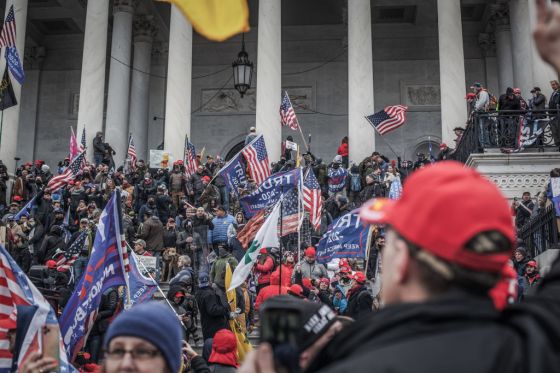
Wikipedia was already on my mind heading into January after my conversation with Maher. But I really glommed onto it while grappling with last week’s horrific attack on American democracy. The episode can be understood through many valid lenses, including those of racism, anti-Semitism and neo-fascism, given the presence of Confederate battle flags and neo-Nazi regalia among the rioters. But it’s also the most tangible real-world result yet of our current epistemological crisis (following other disturbing episodes, like Pizzagate). Many of the participants in the attempted government coup believe that last year’s presidential election was stolen, thereby justifying their actions—even though that’s a lie ginned up by the President and his allies and repeated verbatim on social media platforms like Facebook, Twitter and YouTube (plus certain cable news channels, of course).

You’d be hard pressed, however, to find any of that bunk on Wikipedia; what it has are clear-eyed articles discussing the events as historical phenomena. That got me wondering: why does Wikipedia seem to have a general immunity to bullshit? And can we confer that immunity onto other social media platforms, as if receiving a vaccine?

Wikipedia’s most obvious answer to our crisis of truth is moderation. When the social media platforms began to crack down on President Trump and various conspiracy theories after last week’s attack, they were exercising their immense moderation power in a way they’ve been reluctant to do until now. (That change might have something to do with the fact that the end of Trump’s tenure is just days away). But Wikipedia has had a culture of moderation since day one, with contributors and editors—all volunteers—going back and forth on articles until they agree on some form of truth. (In fact, the more contested a given Wikipedia article is, the more accurate its contents are likely to be, says Maher).

Social media platforms hire moderators, but their focus is generally on the psychologically traumatizing work of removing illicit content like child pornography, rather than on Wikipedia-style debates sifting fact from fiction. So the work of countering falsehoods on social media falls to journalists, academics and other experts.

As valiant as those efforts are, they’re doomed to fail. As I spoke with Maher, it became clear just how focused Wikipedia is on giving its moderators not just the power to do their jobs, but the tools, too. That includes long-standing features like footnotes, citations and changelogs—none of which are available to those attempting to correct falsehoods on social media platforms. Additionally, in my conversation Maher, it became clear that Wikipedia’s product roadmap is built around truth. For example, Maher says longtime editors who have earned the community’s trust now have access to technology that can identify and block or reverse attempts to vandalize pages by sophisticated attackers using multiple Internet Protocol (IP) addresses to make it seem like multiple users are agreeing on a given change, thereby faking community consensus.

“This kind of—we call it P.O.V. pushing—is not just around misinformation, it can also be around whitewashing the articles of politicians, or it can be a state-sponsored initiative in order to do reputation management or political point of view pushing,” says Maher. “So we’ve worked with our communities to think about what tools they need to be able to more rapidly address these sorts of issues. The same tools that we use for this are the tools that we use for spam fighting. They’re the same tools that we use for identifying incidents of harassment.”

Put another way, Wikipedia can offer the truth because it was (and is still being) built for the truth. It attracts truth-minded volunteers by offering them the tools they need to do their job—a stark comparison to social media sites, where pretty much every new feature (messages! snaps! stories!) are designed to goose engagement, and often make bullshit easier to spread and harder to check. They were built so users could share banal life updates or pictures, their founders never anticipating their products would one day contribute to an attempted subterfuge of American democracy. Their user interfaces aren’t meant for truth, and the business models they have built up around those interfaces—based on hyper-targeted advertising and maximal engagement—can’t possibly accommodate it. You crack down on all the super-engaging bullshit, and your profits go out the window.

“Unlike social media platforms, [Wikipedia] editors don’t fight for engagement—the incentives that push content to the extremes on other platforms simply don’t exist on Wikipedia,” say Miles McCain and Sean Gallagher, students performing research with the Stanford Internet Observatory who jointly responded to my questions. “After all, Wikipedia has no incentive to maximize engagement: it’s a non-profit, and not ad-supported.” Social media executives, meanwhile, have long held that they mostly shouldn’t be held accountable for the content posted on their platforms, and that policing that content opens a potentially dangerous Pandora’s box. “Having to take these actions fragment the public conversation,” said Twitter CEO Jack Dorsey on Wednesday night, reflecting on his company’s decision to ban Trump. “They divide us. They limit the potential for clarification, redemption, and learning. And sets a precedent I feel is dangerous: the power an individual or corporation has over a part of the global public conversation.”

As popular as Wikipedia is, its survival is not a given. Like all encyclopedias, it’s dependent on the existence of high-quality primary sources, including journalism—and my industry, for the most part, is not in great shape, especially at the local level. This isn’t just a question of the financial solvency of media outlets. If people don’t trust the sources upon which Wikipedia is based, why should they trust Wikipedia? Maher says the Wikimedia Foundation is cognizant of this, and is working on ways to support the knowledge ecosystem upon which Wikipedia relies.

“It does no good for people to highly trust Wikipedia, but then not trust the institutions of the free press or to trust academic inquiry or scientific research,” she says. “All of these things need to have an underlying public confidence in order for us to be able to face them and for people to then have confidence in what’s on Wikipedia. So we are looking at this as a broader ecosystem question and saying, ‘where are the ways in which we sit maybe as a point of introduction to knowledge, but then also, what are our obligations for how we think about how to support this?'”

If there’s a lesson to be learned from Wikipedia’s continued success, it’s this: build people the tools to effectively call out bullshit, and, like baseball-playing ghosts emerging from an Iowa cornfield, they will come. But what works for Wikipedia—an old-school Internet labor of love—is unlikely to work for a major corporate power with quarterly goals to meet and a market to appease. Maybe the answer, then, is for us as users to spend less time on Twitter, and more on Wikipedia.

Wednesday, 13 January 2021

New story in Technology from Time: In These Tumultuous Times, Sea Shanty TikToks Have Suddenly Become a Port in the Storm


While 2021 has already served up plenty of wretched bombshells, the best surprise of the past two weeks might be TikTok’s biggest new trend: sea shanties. As the world hurtles head-first into 2021, sea shanties are turning into a safe harbor for social media users looking to take their mind off the events of the day with some (very) old-timey entertainment.

It all started when Scottish musician Nathan Evans recorded a video performing a remarkably catchy rendition of “Wellerman,” a 19th century shanty of New Zealand origin. It blew up online, garnering over four million views on TikTok alone. From there, it wasn’t long before other users were piggybacking on the trend by duetting the whaling tune alongside Evans or debuting sea shanty performances of their own. Thus, #ShantyTok was born.

Despite the fact that the recent resurgence of sea shanties is owed entirely to the internet, their modern appeal certainly harkens back to their original purpose: synchronizing individual efforts to achieve a common goal.

In centuries past, the purpose of these call-and-response work songs was, of course, to maintain a ship crew’s focus on safely navigating often dangerous waters. Whether the task was rowing, hoisting sails or hauling nets, the hand-over-hand beat of sea shanties was intended to help sailors keep time with each other.

But amid a global pandemic that has kept many people at home and isolated for nearly a year, sea shanties can help foster a sense of community during a time when many are feeling lonely. As expertly noted by Vulture‘s Kathryn VanArendonk, at their heart, sea shanties are “unifying, survivalist songs, designed to transform a huge group of people into one collective body, all working together to keep the ship afloat.”

They’re also undeniable earworms.

Thanks to TikTok’s duet feature, which allows users to build on fellow TikTokers’ videos with their own additions, Evans’ solo rendition of “Wellerman” has been transformed into a complex split-screen harmony, complete with multiple vocal parts and instrumental accompaniment. It’s a group project that everyone in the video worked on individually, which makes its success all the more impressive.

Affirming that the traditional shanty format possesses a timeless quality, some people have even begun turning popular songs of today, like Smash Mouth’s “All Star” and Cardi B and Megan Thee Stallion’s “WAP,” into sea shanties in their own right.

A video of one reluctant sea shanty fan discovering the allure of these nautical ditties has also gone viral. All it took was a car ride and an inspirational brother.

The 45-second clip perfectly showcases how shanty sing-alongs have a way of drawing others in to the fold, or, as one commenter puts it, “I guess it makes sense when you think [about how] the artform originated as a way to provide pleasure, connection and entertainment during periods of sustained social isolation.”

So if you’re in need of a distraction amid everything going on right now, #ShantyTok is here for you. Keep calm and shanty on.

Tuesday, 12 January 2021

New story in Technology from Time: Big Tech’s Crackdown on Donald Trump and Parler Won’t Fix the Real Problem With Social Media


If democracy is a river, or a forest, or a pristine meadow, then social media platforms are a factory spewing toxic pollutants into it. Even if you block the new effluent, the pollution that has already escaped won’t just go away. It needs to be cleaned up.

That’s the analogy used by Whitney Phillips, one of the world’s leading experts on the rise of the far right online.

Twitter and Facebook’s ban of President Trump last week, and the deplatforming of the rightwing social network Parler by Apple, Google and Amazon on Monday, are crucial first steps in stemming the flow of pollution, says Phillips, who is an assistant professor at the Syracuse University department of communication and rhetorical studies. But more is still spilling out, and that’s before you even get to the question of how to clean up what’s already escaped.

Read More: Why Facebook and Twitter Suspended Trump’s Accounts After Capitol Riots

“The real thing that we have to deal with long term is how these platforms didn’t just allow, but actively incentivize the spreading of this pollution. For years and years and years and years, it was allowed to build up in the environment for so long, such that you now have this enormous percentage of the population that has really internalized so much of this pollution,” she says. “You can take away Parler. But that’s not going to take away the belief in tens of millions of people that the election was stolen.”

Phillips and others who research extremism on social media say the core algorithms and business models of the biggest social platforms like Facebook, Twitter and Google-owned YouTube are in large part to blame for the series of events which led eventually to a violent insurrectionist mob of President Trump’s supporters storming the seat of American democracy on January 6. Those platforms amplify content that provokes emotional reactions above all else, Phillips says. That means “historically, the platforms have actually done more to benefit and embolden the right” than any other political grouping.

Trump Supporters Hold "Stop The Steal" Rally In DC Amid Ratification Of Presidential Election
NurPhoto via Getty Images—Shay Horse/NurPhotoTrump supporters near the U.S Capitol, on January 06, 2021 in Washington, DC.

On Monday, Amazon pulled Parler’s web hosting, which was provided through Amazon Web Services (AWS), forcing it offline. Google and Apple each suspended Parler from their app stores over the weekend, citing its lax moderation practices and the danger that violence was being planned on the platform. “We cannot provide services to a customer that is unable to effectively identify and remove content that encourages or incites violence against others,” Amazon said in a letter to Parler. In response, Parler filed a lawsuit against Amazon on Monday.

The cutting off of Parler came shortly after President Trump himself was banned permanently from Twitter two days after the storming of the Capitol. He was also suspended from Facebook until Joe Biden’s inauguration at the earliest. Justifying Trump’s suspensions, Twitter and Facebook said the President’s continued presence would have increased the risk of violence and potentially undermine the peaceful transition of power. Trump’s YouTube channel remains online, though YouTube deleted a video in which he praised rioters who stormed the Capitol.

Parler has risen in popularity over the past year, as mainstream social networks like Facebook, Twitter and YouTube have slowly built up their guardrails against misinformation and conspiracy theories like QAnon and election fraud, and banning users who violate their policies the most egregiously. Despite those efforts, those mainstream platforms remain hotbeds of misinformation. Still, the rise of Parler (and now, the movement of many Parler users to the messaging app Telegram) is a sign that even if Facebook, YouTube and Twitter manage to eradicate the pollution from their platforms entirely, it will still exist, swilling around American democracy in the form of radicalized users and exploited by opportunistic politicians and unscrupulous media.

Read More: White Supremacism Is a Domestic Terror Threat That Will Outlast Trump

Researchers who study disinformation and the far-right online say that deplatforming can be successful. They point to when the main platforms banned Alex Jones, the founder of conspiracy theory site InfoWars and Milo Yiannopolous, a far right former Breitbart editor, and to the shutting down of Reddit forums catering to incels or the most toxic of Trump supporters, as examples of successfully reducing the number of people such messages can reach. However, researchers point out, deplatforming may do nothing to deradicalize the most devoted users—or reduce the risk of violent attacks. (The FBI says that armed protests are being planned at all 50 state capitols and the U.S. Capitol in the days leading up to, and the day of, Biden’s inauguration.)

At this late stage, when so many people are already radicalized, the solutions have to be more complex than simply deplatforming people, says Phillips. “I think that they made the right call,” she tells TIME of the platforms’ decisions to deplatform Trump and Parler. But up until this point, she says, they have “continually made the wrong calls, or opaque calls, or inconsistent calls, or calls that ultimately allowed this to happen for so long.”

The tech companies’ eventual decisions to deplatform Trump have quickly fed into conspiracy theories about Silicon Valley unfairly censoring conservatives, a narrative pushed by Republicans and online conservatives over the past several years. Now, politicians like Trump are galvanizing their supporters with claims they are unfairly having their freedom of speech restricted by a cabal of companies bent on overturning Trump’s supposed election victory.

Trump Supporters Hold "Stop The Steal" Rally In DC Amid Ratification Of Presidential Election
NurPhoto via Getty Images—Shay Horse/NurPhotoTrump supporters take the steps on the east side of the US Capitol building on January 06, 2021 in Washington, DC.
Experts in the field also remain troubled by the problem of big corporations like Facebook, Google and Amazon having the sole power to decide who can and can’t have an online voice. In Vietnam, Facebook has complied with requests from the authoritarian government to remove accounts of dissidents. In India, it has evaded banning ruling party lawmakers even when they’ve broken its rules. Experts are troubled by the timing of the decision in the U.S.: neither Facebook or Twitter decided to suspend Trump until after the Democrats won control of the Senate on Jan. 6 and Biden was confirmed by lawmakers as the next President. “It is hard to view this decision, and the timing, as anything other than trying to cozy up to power, as opposed to some form of responsible stewardship of our democracy,” said Yael Eisenstat, a former Global Head of Elections Integrity Operations for political advertising at Facebook, in a statement.

Facebook and Twitter did not immediately respond to TIME requests for comment. In his statement announcing Trump’s suspension, Facebook CEO Mark Zuckerberg said: “Over the last several years, we have allowed President Trump to use our platform consistent with our own rules, at times removing content or labeling his posts when they violate our policies.” This is true, but only because Facebook wrote an exemption into its own rules that allowed posts by public figures like Trump to remain on the platform even if they broke some rules.

In Russia, where a rightwing autocrat is in power, dissidents viewed Twitter’s decision to ban President Trump with extreme skepticism. “In my opinion, the decision to ban Trump was based on emotions and personal political preferences,” tweeted Russia’s main opposition leader, Alexey Navalny. “Of course, Twitter is a private company, but we have seen many examples in Russian and China of such private companies becoming the state’s best friends and enablers when it comes to censorship.” German Chancellor Angela Merkel also raised concerns about the move’s implications for free speech.

Read More: How Ashli Babbitt Is Being Turned Into a Far-Right Recruiting Tool

While the Biden Administration is mulling reform of Section 230, the law that allows platforms legal protection from accountability for what is posted on them, tech policy experts say that it is low on the incoming President’s list of priorities. His tech policy pointman, Bruce Reed, has expressed a desire to reform Section 230 in the past. In December, Senator Mark Warner, a leading Democrat critic of Facebook, told TIME that Biden’s approach could include invoking civil rights laws to bring stricter penalties for people spreading hate speech or racist activity online. But the incoming team is also stacked with former employees of big tech companies, which has left many activists prepared for a fight ahead over the shape of Biden’s tech policy. “Quite frankly, if people in the Biden Administration want to spend their time and energy fighting to help Mark Zuckerberg make more money, then that’s a fight I will take up,” says Rashad Robinson, President of Color of Change, one of the first civil rights groups to call for Trump to be deplatformed back in 2017.

On Monday, nine days before President Joe Biden is set to be inaugurated, and after years of ignoring calls from civil society to appoint a senior executive with civil rights expertise, Facebook announced that a former Obama Administration official, Roy Austin Jr., would be its first ever vice president for civil rights, with a responsibility of overseeing the company’s accountability for racial discrimination and hatred. He starts the day before Biden’s inauguration.

It may be inevitable that political pressure will always have some bearing on the way platforms moderate themselves. In this case, the platforms are finally pivoting their enforcement to respond to Democratic pressure—which happens to align somewhat with civil society—after years of largely ignoring those calls under the Trump Administration. But still, experts say, the core problem remains. “The underlying problem here is not the [platform] rules themselves,” writes technology columnist Will Oremus for OneZero, “but the fact that just a few, for-profit entities have such power over global speech and politics in the first place.”

Friday, 8 January 2021

New story in Technology from Time: Twitter Permanently Suspends President Donald Trump’s Account


Two days after the deadly insurrection at the U.S. Capitol, Twitter announced on Friday evening that it was permanently suspending President Donald Trump’s account “due to the risk of further incitement of violence.”

In a series of tweets on its @TwitterSafety account, the social media giant said that Trump’s account had continued to violate the rules even after being warned by temporarily locking Trump’s account on Wednesday evening after the violent siege.

“After close review of recent Tweets from the @realDonaldTrump account and the context around them we have permanently suspended the account due to the risk of further incitement of violence,” Twitter said in its announcement. “In the context of horrific events this week, we made it clear on Wednesday that additional violations of the Twitter Rules would potentially result in this very course of action.”

The move comes a day after Facebook CEO Mark Zuckerberg said that Trump’s Facebook and Instagram accounts would be indefinitely suspended, because “the risks of allowing the President to continue to use our service during this period are simply too great.”

Thursday, 7 January 2021

New story in Technology from Time: Facebook and Twitter Finally Locked Donald Trump’s Accounts. Will They Ban Him Permanently?


Twitter and Facebook imposed their toughest restrictions so far on President Donald Trump on Wednesday evening, after he incited his supporters to storm the U.S. Capitol in Washington in an attempt to overturn his election loss. Both companies temporarily suspended the President from posting on their platforms and removed several of his posts, but stopped short of permanently banning him.

The account suspensions are the farthest either platform has gone in restricting Trump from broadcasting his message directly to his tens of millions of followers. The moves come after years of calls for social media companies to do more to stop the President from spreading misinformation, conspiracy theories and threats that undermine democracy.

Twitter required Trump to delete three tweets that the company said violated their rules, and said it would suspend his account from posting for 12 hours after their removal. “If the Tweets are not removed, the account will remain locked,” Twitter said in a statement. The tweets are no longer visible on his profile. The company also said that if Trump violated their rules again, his account would be permanently banned.

After Twitter acted, Facebook suspended Trump from posting for 24 hours from Wednesday evening, and deleted two posts it said violated its rules. Instagram, owned by Facebook, did the same.

Read More: Photographs From Inside the Chaos at the Capitol

Twitter, Facebook and YouTube also removed a video posted by Trump in which he called on rioters to go home, but doubled down on his false claims that the election was stolen and told rioters he loved them. “This is an emergency situation and we are taking appropriate emergency measures, including removing President Trump’s video,” Facebook’s chief of safety and integrity, Guy Rosen, said in a statement. “We removed it because on balance we believe it contributes to rather than diminishes the risk of ongoing violence.”

Trump Supporters Hold "Stop The Steal" Rally In DC Amid Ratification Of Presidential Election
Jon Cherry/Getty ImagesA pro-Trump mob enter the Capitol Building after breaking into it on January 6, 2021 in Washington, DC.

Facebook and Twitter have long had rules against inciting violence on their platforms, but throughout Trump’s presidency they have refused to suspend or ban Trump in cases where critics say he has fanned the flames of violence.

As Black Lives Matter protests spread around the country in late May after the police killing of George Floyd, Twitter prevented most ways of engaging with a tweet by Trump that said “when the looting starts, the shooting starts”—which the company said violated its rules on incitement to violence. But it allowed the tweet to remain accessible behind a warning message, with Twitter saying in a statement it “determined that it may be in the public’s interest for the Tweet to remain accessible.” Facebook, meanwhile, refused to take any action against Trump’s post, prompting some employees to stage a walkout.

Read More: Trump’s Twitter Has Defined His Presidency. Here’s Why That Won’t Change

Chief among the platforms’ reasons for not banning Trump at that point were that as President, his words were inherently worthy of public attention, scrutiny and discussion. That appeared to change after Wednesday’s assault on the Capitol. “There have been good arguments for private companies to not silence elected officials, but all those arguments are predicated on the protection of constitutional governance,” said Alex Stamos, Facebook’s former chief of security, in a tweet on Wednesday shortly before Facebook and Twitter temporarily suspended Trump’s accounts. “The last reason to keep Trump’s account up was the possibility that he would try to put the genie back in the bottle but as many expected, that is impossible for him.”

The events of January 6, 2021, were—to the tech platforms at least—a glaring sign that the risk of violence, and to democracy, was now greater than the necessity to continue giving a sitting President a platform to speak. And for platforms steeped in the very American notion that freedom of speech is core to democracy, it was a belated acknowledgement of a key lesson from history: that sometimes, a democratically-elected leader can intentionally undermine democracy with inflammatory speech and a large platform. Many democracies have caveats to free speech rules to prevent that from happening. Facebook and Twitter have similar rules for most ordinary users, who can be banned for inciting violence. Until now, Trump has got away with little more than a slap on the wrist for using the platforms to do the same.

“The riots in D.C. yesterday demonstrate very clearly the consequences of disinformation amplified in social media with such incessant frequency that it becomes an alternative reality for those targeted with lies and conspiracy,” said Ben Scott, the executive director of Reset, a group lobbying for stricter regulation of tech platforms, in a statement to TIME. “Regulating these tech platforms should be a major priority for the Biden administration.”

Even after suspending Trump’s accounts, Facebook and Twitter remain platforms where misinformation circulates almost freely. On Thursday morning, a Facebook group called “Stop the Steal” with more than 14,000 members continued to be accessible on the platform. And while Facebook has designed algorithms that since 2019 (when they work properly) have pointed users in the direction of fact-checks when verified false information is posted by individual users, those protections are still easily circumventable so long as users post screenshots of a piece of misinformation instead of linking directly to it.

And the relatively short lengths of the suspensions (12 hours from Twitter and 24 from Facebook) show just how reticent the platforms still are to fully ban a sitting President. Still, neither platform has ruled out taking further action against Trump—and the possibility that he might be banned entirely after stepping down as President remains open.

“This temporary ban doesn’t go far enough,” said Rashad Robinson, president of Color of Change, a group that has long called on social media platforms to ban President Trump. “Ban him permanently. He’s done enough damage. Do not allow him to return in a day to continue to spread dangerous misinfo.”

Wednesday, 6 January 2021

New story in Technology from Time: Twitter Locks Down Trump Video Over ‘Risk of Violence’ as His Supporters Mob the Capitol


As Trump supporters stormed and breached the U.S. Capitol on Wednesday, Twitter escalated its flagging of Trump’s tweets for disputed information by marking a video he tweeted out amid the riot as carrying a “risk of violence.” The social media platform restricted the tweet from being liked or shared.

In the video, Trump speaks directly to his supporters, whom he had urged to gather in Watching D.C. as the houses of Congress took up the Electoral College certification that would finalize Joe Biden’s victory over the President. Trump used the video to once again falsely claiming election fraud, before encouraging his supporters who had unlawfully entered the Capitol building to go home in peace. “You have to go home now. We have to have peace. We have to have law and order,” he says. “So go home. We love you. You’re very special…I know how you feel.”

The video was tweeted out shortly after 4 p.m. EST on Wednesday and was subsequently marked with a warning that read, “This claim of election fraud is disputed, and this tweet can’t be replied to, retweeted, or liked due to a risk of violence.”

Although numerous tweets of Trump’s have been flagged for disputed information, this appears to be the first time that Twitter has locked down engagement with one of his posts as well as marked it for “risk of violence.”

Later in the evening, Trump again tweeted false information about the election and urged those who stormed the Capitol “go home with love & in peace.” Twitter similarly restricted engagement with that tweet.

Tuesday, 5 January 2021

New story in Technology from Time: Health Workers Are Going Viral on TikTok for Debunking COVID-19 Myths


At first glance, the December video looks like just the latest rendition of a TikTok trend. On one side of the split screen “duet,” a video game car bounces down a mountain; on the other, the TikTok user “dr.noc” scrambles to talk as much as he can before the car slams into the ground. But while other videos feature stream-of-consciousness chatter, Dr. Noc’s words are precise. Noc, who in real life is Morgan McSweeney, a PhD scientist who researches treatments for diseases like COVID-19, is trying to debunk as many myths about coronavirus vaccines as he can before the final animated explosion.

@dr.noc

#duet with @beamng.crashed Follow for actual facts, not spooky paranoia. #covid19 #coronavirus #covidvaccine #science #drnoc

♬ original sound – BeamNG.Drive

Since the start of the pandemic, misinformation of the sort debunked by McSweeney has mushroomed across TikTok, spreading rapidly thanks to an algorithm that has allowed misleading videos to rack up thousands of views before the app can remove them. Many of these videos are as simple as an individual talking to their video camera about some false fact, but they can take off—perhaps because fiction is (usually) stranger than the truth; a convoluted conspiracy theory involving the government and global billionaires can be far more compelling than the straightforward reality that a vaccine is safe and effective. However, these videos are more insidious than legends about Bigfoot. Misinformation about COVID-19 can discourage people from taking precautions that limit the spread of the virus, such as receiving a vaccine.

TikTok misinformation is unique in its reach among the very young, who comprise the majority of its user base. Despite the fact that young adults are less likely to get severe COVID-19 disease, stopping the spread of the virus among this demographic is essential to limit the damage done by the pandemic. The U.S. Centers for Disease Control and Prevention has found that outbreaks of the virus among young people seem to drive later outbreaks among older people, who are more likely to become severely ill and die from the disease. But slowing the spread of the virus among the young poses particular challenges. Young people are more likely to work frontline jobs like food service that make social distancing difficult; additionally, people who are 18 to 29 years old are less likely to take precautions known to slow the spread of COVID-19, such as avoiding crowds and maintaining a distance of six feet from other people.

While the young tend to be more comfortable online than older people, that hasn’t inoculated them against the spread of false claims. In fact, some studies have shown they seem even more prone to believe misinformation about the pandemic: A September survey of more than 21,000 Americans by researchers led by a group from Northeastern University found that adults under 25 had the highest probability of believing a false claim about COVID-19. For instance, 28% of respondents ages 18 to 24 incorrectly believed that the coronavirus passed to humans by eating bats, compared to just 6% of people over 65.

It seems as if one of the reasons young people often believe misinformation is because they tend to get more of their news on social media. In 2018, 36% of Americans ages 18 to 29 said they often get news on social media, making it the most common news source for that age group, according to Pew Research Center polling. And for many young people in 2021, social media means TikTok; in 2019, about 60% of the 26.5 million active monthly TikTok users were between 16 and 24, Reuters reported.

Although the company has mounted an effort to cut back on false claims—including taking down 29,000 videos about the virus posted by European users this summer—you don’t have to look far to find misinformation about COVID-19 on the app, from false claims about vaccines to misleading posts about masking. However, the spread of misinformation on TikTok has also had the effect of drawing in scientists and healthcare workers to combat false claims with their expertise.

At the forefront are scientists like McSweeney, who has tirelessly posted COVID-related clips of himself on the app since last winter. McSweeney says that because even users with small followings can post videos to TikTok that gain a major audience, it’s a great way to reach new people, especially the young, who might otherwise miss important facts about the pandemic–or be exposed to misinformation. McSweeney says that homemade TikToks seem to come off as more authentic than polished videos by official organizations like the CDC. “When it’s just you in front of a camera, it’s a little bit more like a conversation,” McSweeney says.

It’s difficult to get an exact estimate of how many healthcare workers and scientists use TikTok to talk about their work and public health issues, but they appear to number at least in the dozens. Although some of the most popular health TikTokers have become celebrities elsewhere, including dermatologist Dr. Sandra Lee (who first gained notoriety as “Dr. Pimple Popper” on YouTube) most are everyday nurses and doctors who spend their days caring for patients. Prior to the pandemic, many of them covered perennial favorite topics—such as women’s health and dermatology—but in the last year, many of their videos have turned to the pandemic—and, more specifically, to dispelling the misinformation proliferating across social media.

To combat misinformation on TikTok, scientists like McSweeney draw upon their expertise to dissect complex science for their viewers, and back it up with real evidence. By posting videos from their living rooms on TikTok and responding to comments, they’re also able to build familiarity with their viewers. For example, Kristin Patel, a 29-year-old Illinois-based graphic designer, says that she started deliberately avoiding the news in 2020. Between what she sees as the political polarization of news sources and the ever-rising COVID-19 death count, she realized that she just didn’t want to hear any more. But McSweeney won Patel over with the way he combined scientific evidence with entertainment, and has remained a constant presence for her throughout the pandemic.

“I think seeing Doctor Noc’s face from the beginning, I trust Doctor Noc way more than I trust NBC, or some, like, no-name reporter. I don’t know their agenda. But I know that Dr. Noc doesn’t really have an agenda, outside of science,” Patel says.

Dr. Rose Marie Leslie, a chief family medicine resident at the University of Minnesota Medical School, frequently posts TikTok videos about health issues from her home and the hospital. Leslie, who TikTok named one of the “most impactful creators” of 2020, says it’s especially important to her to reach young people, because many of them are at a time in their lives when they’re really hungry for health information, but don’t know where to look for it and often aren’t going to the doctor frequently. Leslie aims to show young people that the decisions they make about COVID-19 can make a huge difference for their communities.

“I just had a direct message from somebody who said, ‘I’ve been wearing my mask every single time I go out, because I’ve been watching your videos. Thank you so much.’ Just little things like that are so meaningful to me—knowing that there are people who are listening,” says Leslie. Among her most popular TikToks is a video of her getting the vaccine and sharing her experience with side effects-—just some tenderness and soreness in her arm, although she noted that there can be others, like headaches.

@drleslie

Honestly TOTALLY WORTH It!!! #learnontiktok #tiktokpartner #vaccine #covid19 #doctor

♬ original sound – Doctor Leslie

Combating misinformation about the pandemic with younger Americans has taken on even greater urgency as the U.S. has begun to roll out vaccines—given how important those vaccines are to ending the pandemic, and how malignant anti-vaccination sentiment is in the U.S. and especially on social media. Survey data suggest that younger adults are more hesitant about getting vaccinated than older U.S. residents; only about 55% of adults 18 to 29 and 53% of those 30-49 said they definitely or probably would get a COVID-19 vaccine, compared to 75% of those older than 65, according to a Pew Research Center survey conducted in November.

Halthcare workers like Christina Kim, an oncology nurse practitioner at Massachusetts General Hospital, have countered misinformation with their own videos taking on misinformation head-to-head as well as taking questions from their audiences. Kim, who has over 228,000 followers on TikTok, for example, posted a Dec. 13 TikTok responding to a comment from a viewer who was confused about why vaccines don’t give people COVID-19.

@christinaaaaaaanp

Reply to @megruss9 Keep the questions coming! #covid19 #wearamask #covidvaccine #medicaleducation

♬ original sound – CHRISTINA NP

Kim tells TIME she’s thought at times about quitting the app, given the level of angry messages she’s received from people who disagree with her posts. However, she feels a sense of responsibility to fight misinformation, even if it’s just a “drop in the bucket for the pandemic on the whole.”

“I genuinely want this pandemic to end. I want people to recognize what we need to do to make it end,” says Kim. “And I have responsibility, now with this platform that I have, I think it would almost be irresponsible to step away from that.”

Ad 1