Thursday, 23 April 2020

New story in Technology from Time: Working Out at Home? Here’s the Smartest Exercise Gear You Can Use


Stuck indoors thanks to the COVID-19 outbreak? That doesn’t mean you necessarily have to embrace your inner sloth. Instead, it’s a good idea to find ways to stay active, especially for the physical and mental health benefits of exercise.

For home workout equipment that can really make sure each session counts, you’re going to want some smarter gear, preferably something that keeps track of how much work you’re putting in. Here’s some of our favorite high-tech home workout gear that can track every run, rep or whatever else you’re up to:

Fitbod

Price: $3.99 per month

What is it: A smart workout tracking and training app

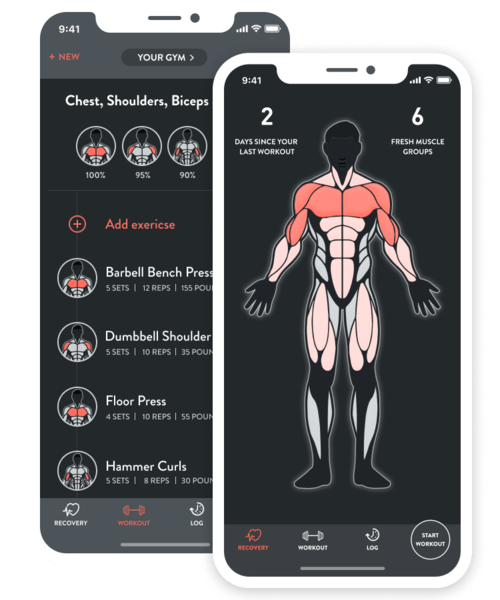
If you’ve got no equipment to work with at home, or are new to the whole home workout thing, check out Fitbod for an easy introduction to body weight and other at-home exercises. Fitbod can build your workout routine — including weight, sets, and reps — for you based on the muscles you want to target, along with the equipment you have (or don’t have). The visual chart showing your muscle groups after each workout make it easy to see when you’re overtraining, or what you’re neglecting in your routine. It even includes instructional videos you can watch before you pull a muscle, just in case you need a refresher on how to do a proper push-up.
Glo Yoga

Price: $18 per month

What is it: An on-demand yoga and meditation class subscription

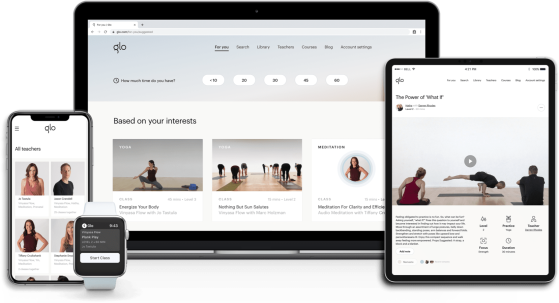
Just because you’re getting in shape doesn’t mean you’ve got to carry huge weights around your house, or spend a ton on equipment. Sometimes you just need a yoga mat and a smartphone. With Glo, a subscription-based yoga and meditation service that works on iOS, Android, and TV platforms like Roku, Amazon’s Fire TV, and Apple TV, you have access to over 4,000 classes ranging from mindfulness meditation training to multiple styles of yoga.

You can also choose classes based on what you’re trying to accomplish, whether it’s nailing the basics of yoga, staying focused, or strengthening your body with more workout-focused exercises. Videos are grouped into courses so you can follow one over multiple weeks, making it easy to stick to a particular style or follow a certain teacher.

 

Crossrope

Price: $99

What is it: A jump rope with interchangeable weighted ropes

Jump ropes are a great way to get the heart thumping, but those light nylon ropes aren’t exactly going to help with your biceps. The Crossrope’s four interchangeable ropes — ranging from a quarter-pound to two pounds — are designed for intense and lengthy workouts, and easy to switch up thanks to the handle’s clever connectors. Available in multiple lengths, it might be the thing that helps you build up more than a just a sweat. Just make sure the neighbors below you don’t mind.
Withings Smart Scale

Price: $99

What is it: A WiFi-connected weight and body mass scale

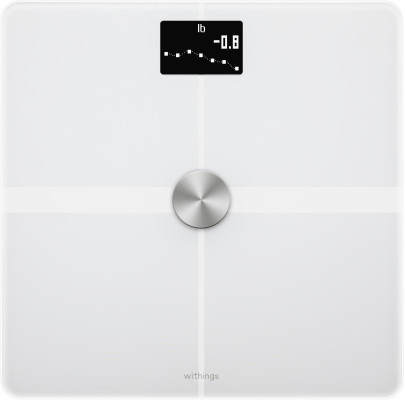
The Withings Smart Scale is great for simple tracking of both your short-term and long-term fitness progress. Syncing with your Apple Health or Google Fit information, the Withings Healthmate app makes it simple to see your weight, body mass, or heart rate trends in an easy to read and date-adjustable graph, along with the rest of your health data. It also displays data like weather forecasts and carbon dioxide levels in your room, just in case you need to know the weather before you hit the gym or go for a run.
JAXJOX Kettlebell

Price: $229

What is it: A weight-adjustable smart kettlebell

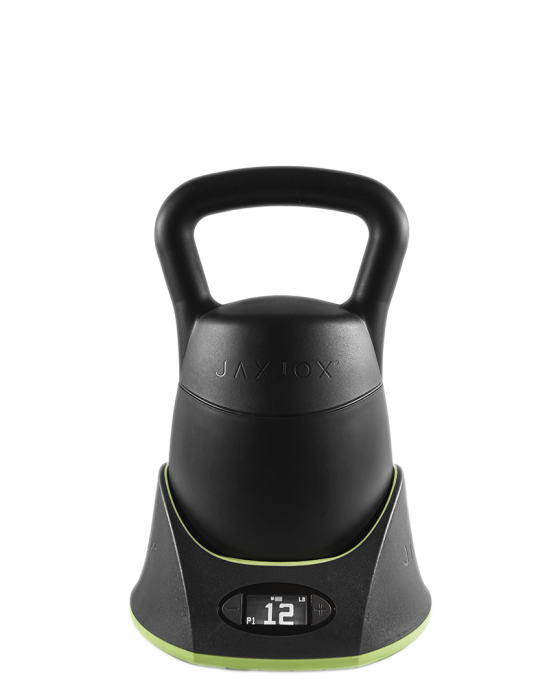
If kettlebells are more your speed, you can always get one that lets you know how hard you’re working out. The JaxJox KettlebellConnect can replace your entire set, thanks to its adjustable weight capabilities. Ranging from 12 to 42 pounds, the KettlebellConnect is great for beginners and experts alike looking to collect some data from their workout routine. The companion app tracks everything from sets, reps, and time spent working out, creating a proprietary Fitness IQ score designed to show how fast you’re progressing. It all syncs with your Apple Health or Google Fit data, too.

Bowflex SelectTech 560

Price: $549

What is it: A set of smartphone-friendly, weight-adjustable dumbbells

Just because they’re called dumbbells doesn’t mean they have to be, well, dumb. If you want exercise equipment just as advanced as the rest of your workout gear, try the Bowflex SelectTech 560, a set of smart adjustable dumbbells complete with companion app (and winner of a Red Dot design award).

Adjusting the weights is simple enough, requiring a handle twist before removing them from their dock. The Bowflex SelectTech app records your weight settings, along with set and rep counts. It also provides dozens of videos to choose from when you want to customize your workout regimen, target a specific muscle group, and nail your technique.

Wahoo Kickr Smart Trainer

Price: $1,199

What is it: A smartphone-friendly bicycling trainer

Instead of taking your bike for a ride outside when you should be staying in, why not rack up a few miles with a bike stand?Available in both wheel-on and wheel-off variants, the Kickr series of trainers is controlled by your smartphone — you can use Kickr’s app to manage elements of your ride (like resistance), view your power output, and combine your Kickr with other Wahoo-made cycling components, like an elevation accessory to simulate uphill rides. The Kickr also syncs with apps like Strava to log your rides.

Fightcamp

Price: $1,219

What is it: A punch-tracking boxing system with on-demand workouts

No, you can’t be in the ring throwing your fists at some sweaty competitor right now, but you can beat on your own punching bag from the comfort of your home. Fightcamp’s boxing workouts are quantified thanks to its in-glove sensors that track your fists of fury while you punch away (purchasing a Fightcamp set nets you gloves, sensors, and a punching bag). You’ll get stats based on everything from your jab speed to intensity to types of punches thrown while you hone your skills. Fightcamp puts its guided workouts in its subscription service, which gets you over 200 workouts to choose from.
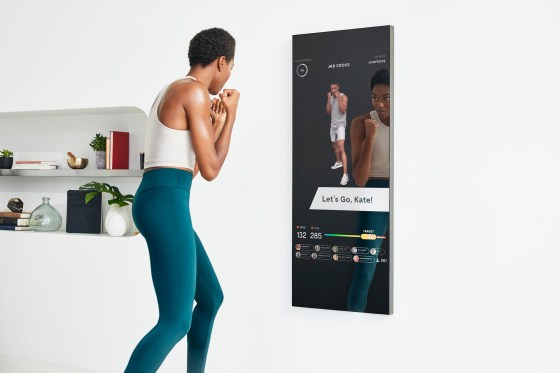
 

Mirror

Price: $1,495

What is it: A workout-specific wall-mounted display that doubles as a mirror

If you miss your group classes at your now-shuttered local gym, Mirror might be a great choice, letting you break a sweat without taking up too much space in your apartment. Despite the name, Mirror does more than reflect your image back to you. It’s an internet-connected mirror that integrates a huge display for streaming workout classes, and a camera for personal training sessions. A subscription to Mirror’s workout catalog grants you access to classes ranging from strength training to yoga to everything in between, available at all experience levels. While the company has since postponed its live classes, you can still access its over 10,000 pre-recorded on-demand workouts to get your gains in.

Ergatta

Price: $1,999

What is it: A gamified rowing machine

Rowing machines aren’t new, but rowing machines pitting you against your fellow athlete are pretty novel. Enter Ergatta, a gorgeous, traditional-looking rowing machine that won’t look out of place in your home — as long as you ignore the 17-inch touchscreen attached to the wooden water flywheel rower.

Unlike other smart rowers, the Ergatta puts less emphasis on on-demand workout videos and more on your training regimen, turning your sessions into races against others. You’ll get a stylish interface that lets you choose workout plans, pick competitive races, and puts you and your rowing activity on a leaderboard — especially helpful since you’re not exactly rowing on the water with your buddies. When you’re done, you can fold the Ergatta up for convenient vertical storage, so no one trips over your new workout machine of choice.
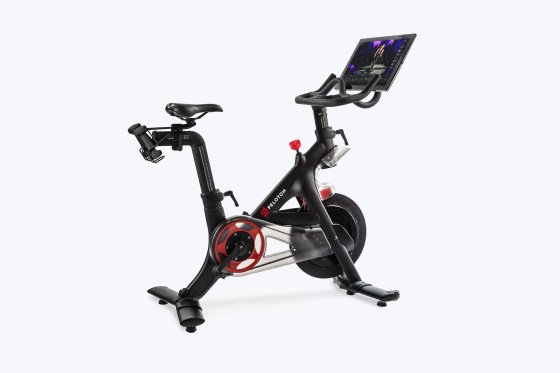
Peloton Stationary Bike

Price: $2,245

What is it: An internet-connected stationary bike with a touchscreen and on-demand workout catalog

If you want a smart stationary bike that makes you feel like you’re in a spin class even though you’re stuck in your basement, check out Peloton. The king of connected stationary bikes, Peloton’s futuristic-looking spin bike has an integrated touchscreen display that makes finding a workout for your skill level or monitoring your progress incredibly simple. Classes are shown on the integrated display, which displays data like speed, distance, cadence, and more so you know how hard you’re working. You’ll also find a leaderboard where you can compare your performance to your fellow riders in your class (you can also hide it if that’s not your thing).

Peloton’s live classes are currently on hiatus, but the company has tons of pre-recorded classes available, with a few more on the way.

New story in Technology from Time: I’m Gaming My Way Through Quarantine — and That’s Nothing to Feel Guilty About


I’m a big reader. I love fiction and non-fiction, I love paper books, audiobooks, e-books, comic books, whatever. And I live near a world-class library for easy access to all of the above. But since the COVID-19 pandemic changed everyone’s lives, I’m struggling to get lost in their worlds. While reading, my mind invariably wanders to the outbreak.

What I can do is play video games. Lots of video games. Something about gaming has been more engaging than reading, giving me that escape I so badly need right now. Over the past few weeks, the Final Fantasy VII Remake, Call of Duty: Warzone, Red Dead Redemption 2, and Fallout 76 have consumed the hours I used to set aside for reading and other activities, like spending time with friends in person.

I am not alone — gaming is up 75% on Verizon’s networks, the company says — and, despite calls to use this time for more “productive” pursuits, I am not ashamed. Sure, I could be mastering bread-making, catching up on my reading backlog, writing a novel, or doing the myriad household tasks I need to tackle. But I’m not. I’m gaming. It’s fun, it kills time, and, crucially, it’s a way to make “social distancing” feel a little more social and a little less distant.

I’m lucky. I’m not sick and no one in my family is sick. I’m still working and have the luxury of playing games to pass the time. And experts say behavior like mine won’t hurt, and may even help, so long as I’m taking care of myself in other ways.

“Accumulating evidence suggests that playing video games isn’t really associated with negative outcomes,” says Chris Ferguson, an associate professor and department chair of psychology at Stetson University. He notes that it’s still important for adults and children alike to exercise and get their work and chores done. But, he says, “as long as that’s all checked off, there are honestly no maximum limits on video game time, particularly as right now there might not be much else to do.”

That’s good news not just for me, but also for the many others out there gaming their way through the outbreak. Take, for example, Donovan Beeson, a 37-year-old in Chicago who’s been furloughed from her job as an executive assistant. She’s supposed to go back to work on May 18, but she thinks COVID-19 will keep her at home much longer. “I’m definitely gaming more,” she says. She’s been filling her time with Animal Crossing: New Horizons and Animal Crossing: Pocket Camp on her phone. These games, in which players do various errands to spruce up their environments, offer a satisfying “virtual to-do list,” she says.

“They tick that ‘you’ve done a thing’ box in my brain when I can’t be doing lots of things,” says Beeson. They also give her a way to connect with her nieces, two young Animal Crossing fans who live miles away in Florida. “They set up an Easter egg hunt for me with the bunny-day themed stuff,” she says. “I was impressed and touched. They made me wear one of the egg day outfits when I came over to [their island to] do it.”

Ellen Blackman, an English instructor at the University of South Carolina, is breaking up her days of recording video lectures and logging on to Zoom meetings with Stardew Valley, in which players run a farm in a small town. “I had this gut reaction of, ‘oh, that sounds comforting,'” says Blackman, 38. “So I loaded that up and started a new game.”

Blackman says she likes open-ended, uncomplicated games. “I don’t like to play platformers or anything with a lot of combat because I get frustrated and I have other parts of my life that are frustrating, so I don’t know why I would want my leisure activities to be frustrating,” she says. She’s also played a little of the space exploration simulator No Man’s Sky and has eyed Animal Crossing, but doesn’t own a Switch, the only console for which it’s available. “They require just enough concentration that you can clear your brain of the things that are causing some anxiety, and stress, and worry,” she says. “But they themselves are not replacing that anxiety with ‘oh, I’m not good at the game.’”

For others, gaming is a way to stay connected to friends who they can’t see in person right now. Garrick Gomez, a 36-year-old support engineer at a Dallas-based financial software firm, has long used games to stay in touch with friends. “I think everyone having to isolate … has really forced everyone to reach out and try to play games and find games that we can all jump on,” he says.

Gomez says he’s even made new connections since self-isolation started. “I’ve definitely played with people I don’t know, that are just friends of buddies,” he says. “Everyone is locked down and playing games so the online gaming community is thriving, and even expanding, which is kind of neat.”

Ferguson says that gaming with friends is a good way to fill the void in our social lives left by the lockdowns. “Most humans just aren’t built for this,” he says. “Video games can be an excellent platform for getting social needs met. That was true pre-COVID, and that’s even more true when other avenues are largely cut-off.”

In the early days of social distancing, calls to use our suddenly ample time to be productive were plentiful. But it’s not an easy time to stay focused on work, school, or anything else. Many of us stuck at home simply need something to keep our minds off the unspeakable horrors unfolding across our cities, our country and the world. Video games, with their robust stories, hours of playtime and built-in social connections, can be that something. They have been for me, and many others — and we shouldn’t feel guilty about any of it.

Wednesday, 22 April 2020

Fox News Breaking News Alert

Fox News Breaking News Alert

Tornadoes rip through Texas, Oklahoma: reports

04/22/20 9:13 PM

Fox News Breaking News Alert

Fox News Breaking News Alert

WATCH LIVE: Trump gives updates on coronavirus with White House task force

04/22/20 3:13 PM

Fox News Breaking News Alert

Fox News Breaking News Alert

Harvard won't 'seek or accept' federal stimulus money after calls from Trump to return cash

04/22/20 12:56 PM

Fox News Breaking News Alert

Fox News Breaking News Alert

Pelosi sidelines plan for proxy voting amid coronavirus

04/22/20 9:33 AM

New story in Technology from Time: Don’t Feel Bad if Your Kids Are Gaming More Than Ever. In Fact, Why Not Join Them?


I’ve been thinking an awful lot about the 1989 Detroit Pistons over the past few days. Rick Mahorn, the starting power forward, can’t make a goddamn layup. Neither can Dennis Rodman. Isaiah Thomas is missing too many shots. Do I have anyone on my team who can stop Michael Jordan, who over the past four games is averaging 83.5 points per game against a squad once known as “The Bad Boys” because of its nasty defensive disposition? I’m not seeing much Bad in these Boys.

Yeah, it would probably be sorry enough if I was consumed by the actual Detroit team that last played an actual NBA game at the outset of the George H.W. Bush administration. But no, I’m talking about the video game version of that championship squad. In NBA 2K20, the popular virtual hoops game that for many fans has replaced real basketball during the coronavirus pandemic, you can play using one of many fine historic NBA squads. And currently, my 13-year-old son and I are in a heated best-of-seven series, featuring my ‘89 Pistons versus his 1991 Chicago Bulls, another NBA title team, on our PlayStation 4. He’s up three games to one.

For a middle-aged man with many adult responsibilities, stressing about Bill Laimbeer’s minutes during these scary times doesn’t seem very healthy.

But what if it actually is? Over the past month or so, while quarantined at home, my son and I have turned to video games as a welcome distraction. With New York City officials having removed all public park basketball rims across the Big Apple in order to enforce social distancing, digital hoops serves as our substitute for the real thing. I find myself looking forward to our daily (or more) 2K battles to break up the monotony. We talk some trash. We share a few laughs. I enjoy educating him about the great NBA teams of my youth. He pretends to care. Then we go back to an uncertain reality.

We’re not alone. Sequestered people around the globe are playing more video games during the pandemic. Gaming was up 75% in the first week of mass self-isolation alone, Verizon says. The supply of Nintendo Switch consoles, a popular choice for families, kids and casual gamers, can’t keep up with demand. Animal Crossing: New Horizons, the latest version of the long-running Nintendo franchise, in which people can hang out online together on digital deserted islands, has sold more than 3 million copies in Japan since its March 20th release. Sales of video game hardware, software, accessories and game cards in the U.S. exceeded $1.6 billion in March, according to the NPD Group, the highest March level since 2008. Hardware spending spiked 63% compared with March 2019, while software grew 34%. While there’s no Major League Baseball right now, NPD Group says MLB The Show 20 had the highest-selling debut month in the popular baseball franchise’s history.

Keep up to date with our daily coronavirus newsletter by clicking here.

Rather than rue this pandemic-driven video game and screen time boom, research suggests we should be cheering it. Playing in moderation, naturally, is key; in May of 2019, the World Health Organization officially voted to include “gaming disorder,” or video game addiction, in its International Classification of Diseases. But research shows that video games can provide important social, motivational, emotional, and cognitive benefits. “And if video games had been beneficial before now,” says Linda Kaye, senior lecturer in psychology at Edge Hill University in the U.K., “then now, they’re as important as ever.”

Experts say we need to shed the stereotypical image of gamers as isolated loners playing for hours on end in a dank basement. Today, kids and adults can socialize with one another, in groups large and small, while playing games online. During the pandemic, connectivity stands out. “It’s all about the social interaction,” says Isabela Granic, professor of developmental psychopathology at Radboud University, in the Netherlands. “You build your own gardens with other people. You play in teams overcoming other teams and militias and whatever it is. And it’s really checking a lot of those social needs in this time of isolation. And as much as kids need us, they need each other just as much.” (I’m starting to feel like my son would be better off playing 2K with his pals instead of me.)

Instead of feeling guilty about kids’ video game screen time, Granic — who leads the Games for Emotional and Mental Health Lab at Radboud — suggests that “parents should feel like they’re offering an opportunity they wouldn’t have had 30 years ago.” Granic’s gaming rule for her twin 14-year-old boys: unlimited video game time before an 8 p.m. dinner, but first they have to do their homework, practice playing a musical instrument, do some coding, read part of a novel, and go outside for an hour. That works out to about 90 minutes of video games a night.

Gaming has benefits for people of all ages. According to a 2016 study conducted by Columbia University’s Mailman School of Public Health, high video game usage among children aged 6-11 was associated with high intellectual functioning and competence in school and fewer relationship problems with peers. In a survey of 900 people in 45 countries who play online multiplayer role-playing games, Mark Griffiths, professor of psychology at Nottingham Trent University and one of the world’s foremost video game researchers, found that approximately three-quarters of both male and female respondents reported making good friends while playing games (the average number of “good friends” was seven). What’s more, 10% of the study participants developed at least one romantic relationship with someone they had met in the game. One of his subjects in a later case study even ended up marrying someone he met playing World of Warcraft.

During a video interview with TIME, Griffiths’ son, 18, was in another room playing games. Grffiths very much approved. “In times of spatial distancing, gaming is what he’s playing with his best mates,” he says. “The last thing I want is my children to be tearing their hair out. Gaming is one of the enjoyable, engrossing things kids like to do.”

Gaming can help players develop a range of skills, experts say. “People learn how to negotiate, collaborate, to take turns, to think critically with others, and so on,” says Granic. “Motivationally, people learn how to persevere in the face of failure. To take failure over and over and still work at some kind of goal. Game designers, for a long time, have been these sorts of wizards of engagement. And they figured out how to keep us at that sweet spot of learning. They’re still better at it than most teachers are.”

There’s evidence that video games can help with mental health, too. “When you’re battling yourself with traumatic thoughts, you can lose yourself in a game,” says Michelle Colder Carras, a public health researcher at Johns Hopkins University who played World of Warcraft to alleviate her own past bouts with depression. She’s published a study illustrating the therapeutic benefits of video games for military veterans. “Right now, during this pandemic, real life is the traumatic situation,” says Colder Caras. “What games are able to do for people in mental health recovery, all of society now needs.”

Granic agrees. “Kids are as anxious as parents right now with this epidemic,” she says. “There’s lots of them worried about their health, about their parents’ health. The formula for anxiety is unpredictability, having no control, and a potential threat out there where you have no agency yourself to do anything about. And what are games really, really good at? Giving you control, giving you predictability, and having potential threats overcome by things you can do, things you have agency over.”

Research shows that video games can be good for your brain in other ways, too. German researchers, for example, have found that adults who played Super Mario 64 for 30 minutes a day for two months had increased grey matter — where the cell bodies of the brain’s nerve cells are situated — in the right hippocampus, right prefrontal cortex and the cerebellum, regions involved in functions like spatial navigation, memory formation, strategic planning and fine motor skills.

It’s important for parents to make sure their kids are finding ways to get physical exercise in this moment, too. Workout oriented games like Nintendo’s Ring Fit Adventure can help, but there’s no digital substitute for real fresh air. While doing a video interview with TIME, Craig Stark, professor at the University of California, Irvine’s Center for the Neurobiology of Learning and Memory, said that his eighth grade son was on a headset chatting with his friends while gaming. “I’m great with that,” says Stark. Still, he adds, “if you’re gaming 20 hours a day, let’s get out, let’s do some other stuff, let’s not just talk to each other on a screen. But in terms of the notion that video games are actively rotting the brain? No, I don’t see any evidence for that.”

See you later, boss. Those ‘89 Pistons are about to mount a comeback. My son — and our PS4 — await.

Please send any tips, leads, and stories to virus@time.com.

Ad 1